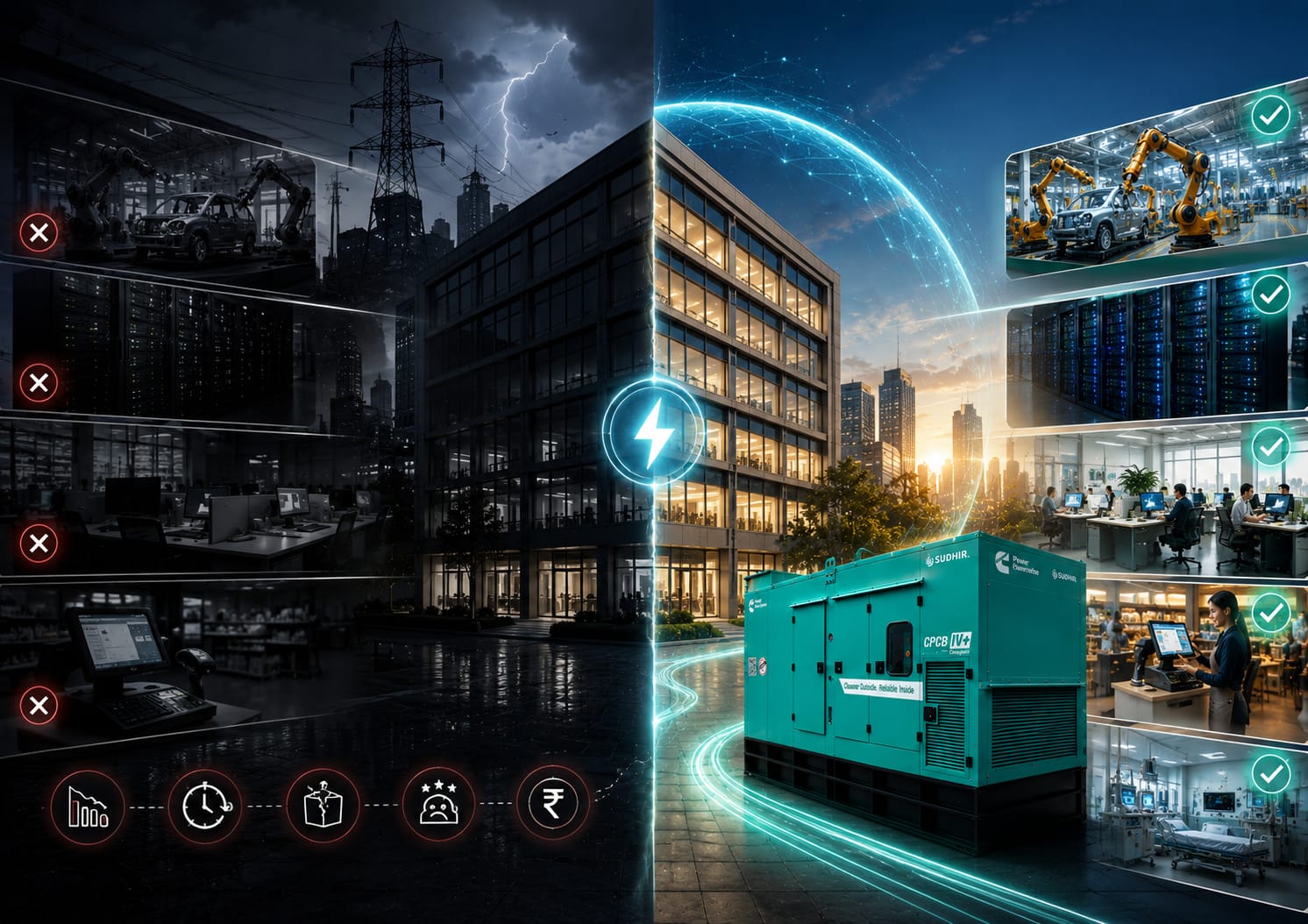
How Power Outages Are Quietly Costing Businesses More Than Expected
Most businesses only notice a power outage when the lights go off.
But the real damage often starts long before the electricity returns.
Across India, companies are quietly losing productivity, revenue, customer trust, and operational efficiency because of unexpected power interruptions. In many cases, business owners do not realise how much these outages are truly costing them until the losses begin adding up over months or years.
What appears to be a “small interruption” can trigger a chain reaction across operations, staff productivity, customer experience, equipment performance, and financial stability.
In 2026, where businesses are more dependent on technology than ever before, power reliability is no longer just an operational issue. It is becoming a major business risk.
That is exactly why organisations across industries are beginning to rethink how they prepare for downtime.
The Hidden Cost Most Businesses Never Calculate
When businesses think about power cuts, they often calculate only the immediate loss.
For example:
- We lost one hour of production.
- The office was down briefly.
- The system restarted after power returned.
But the hidden costs are often much bigger.
A single outage can create:
- Missed deadlines
- Delayed operations
- Damaged inventory
- Customer dissatisfaction
- Lost online transactions
- Reduced employee productivity
- Interrupted communication
- IT system instability
- Equipment wear and tear
- Emergency repair costs
These issues may not appear immediately in financial reports, but over time they directly impact profitability and business growth.
Why Power Reliability Matters More in 2026
Businesses today are far more dependent on electricity than they were even five years ago.
Modern operations now rely on:
- Cloud-based software
- Automated systems
- AI-enabled tools
- Digital payment infrastructure
- Smart manufacturing equipment
- Online customer support
- Remote collaboration systems
- Real-time data processing
This means even short outages can interrupt multiple parts of a business simultaneously.
A power interruption today is not just about lights switching off.
It can stop:
- Sales
- Manufacturing
- Customer service
- Logistics
- Security systems
- Communication networks
- Data access
For many industries, even a few minutes of downtime can become extremely expensive.
The Productivity Loss Businesses Often Ignore
One of the biggest hidden costs of outages is reduced productivity.
Even after electricity returns, operations do not instantly return to normal.
Employees may need time to:
- Restart systems
- Recover lost work
- Reconnect servers
- Reboot machinery
- Resolve software errors
- Resume interrupted tasks
In factories and industrial operations, restarting production lines can take significant time and coordination.
In offices, meetings, transactions, and communication workflows may remain disrupted for hours.
These repeated interruptions quietly reduce overall operational efficiency across the year.
Equipment Damage Can Become a Long-Term Expense
Power fluctuations and sudden outages can damage sensitive equipment.
This includes:
- Servers
- Manufacturing machinery
- Medical equipment
- Cooling systems
- Networking devices
- Security infrastructure
- Computers and storage systems
Voltage instability can shorten equipment lifespan even when visible damage is not immediate.
Over time, businesses may face:
- Higher maintenance costs
- Frequent breakdowns
- Reduced equipment efficiency
- Unexpected replacement expenses
Reliable backup systems help businesses reduce these risks significantly.
Data Loss and IT Downtime Are Growing Concerns
For digital businesses, data is one of the most valuable assets.
Unexpected outages can lead to:
- Unsaved work loss
- Corrupted files
- Server crashes
- Network instability
- Interrupted backups
- Downtime penalties
For industries such as:
- IT services
- Financial services
- E-commerce
- Data centres
- Telecom
- Healthcare
Even short downtime can affect customers directly.
Businesses are now prioritising backup infrastructure because operational continuity is becoming essential for customer trust and competitive advantage.
Customer Experience Suffers More Than Businesses Realise
Customers expect uninterrupted service.
When systems fail because of power disruptions, businesses risk:
- Delayed responses
- Failed transactions
- Poor service experience
- Delivery disruptions
- Communication gaps
In retail and hospitality environments, outages can immediately affect customer confidence.
In manufacturing and logistics, delays can impact client relationships and long-term contracts.
In 2026, customer expectations are higher than ever, and operational reliability plays a major role in brand perception.
Industries Feeling the Biggest Impact From Outages
Manufacturing
- Material wastage
- Delayed dispatch
- Missed targets
- Machine damage
Continuous power is critical for operational stability.
Healthcare
- Critical care equipment
- Diagnostic systems
- Emergency operations
- Temperature-sensitive storage
Power interruptions can create serious operational risks.
IT and Data Centres
- Client operations
- Cloud services
- Hosting infrastructure
- Digital platforms
Reliable backup is essential for maintaining uptime expectations.
Retail and Commercial Spaces
- Billing systems
- Digital payments
- Air conditioning
- Security systems
- Customer experience
Businesses cannot afford frequent disruptions.
Construction and Infrastructure Projects
- Delay timelines
- Affect worker safety
- Interrupt equipment operation
- Increase project costs
Reliable power support is becoming increasingly important in infrastructure development.
Why Businesses Are Investing in Better Backup Solutions
Businesses are no longer treating backup power as a secondary investment.
They now view it as essential infrastructure.
Companies are prioritising:
- Reliable generators
- Fast backup response
- Scalable power systems
- Fuel-efficient solutions
- Low-maintenance infrastructure
- Smart monitoring systems
- Long-duration support
Decision-makers understand that prevention is often far less expensive than operational disruption.
The Shift Towards Business Continuity Planning
Forward-thinking organisations are integrating power backup into long-term business continuity planning.
- Operational resilience
- Disaster preparedness
- Customer reliability
- Data protection
- Revenue stability
Businesses that prepare for disruptions are better positioned to maintain operations under pressure.
What Businesses Should Evaluate Before Choosing a Backup Solution
Operational Load Requirements
Understanding actual energy demand helps ensure proper system sizing.
Backup Duration
Businesses should determine how long operations must remain active during outages.
Service and Support Availability
Fast technical support is essential during emergencies.
Fuel Efficiency
Efficient systems reduce long-term operational expenses.
Scalability
The system should support future business growth.
Industry-Specific Needs
Different sectors require customised backup strategies depending on operational sensitivity.
Why Experienced Power Solution Providers Matter
Businesses need experienced partners who can provide:
- Technical consultation
- System planning
- Installation expertise
- Ongoing maintenance
- Fast support response
- Reliable service networks
Experienced providers help businesses minimise operational risks while improving long-term reliability.
Final Thoughts
Power outages are costing businesses far more than many organisations realise.
The financial impact is not limited to lost electricity. It affects:
- Productivity
- Customer experience
- Equipment lifespan
- Operational continuity
- Revenue stability
- Brand reputation
In 2026, uninterrupted power is becoming a critical part of running a successful business.
Companies that invest in reliable backup infrastructure today are better prepared to handle future operational challenges with confidence.
Talk to Sudhir Power Experts
If your business is looking to reduce downtime risks and improve operational reliability, expert guidance can help you choose the right backup power solution.
Contact Sudhir Power today:
- Call: +91-124-4168000
- Email: info@sudhirpower.com
Get professional support for dependable power solutions tailored to your business needs.